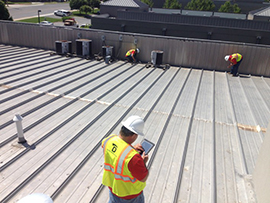
Menifee sits in an Inland Valley climate zone where commercial flat roofs absorb months of intense heat before facing a compressed rain season. That pattern makes roof inspection a seasonal discipline as much as a routine one, with timing tied directly to what the weather has just done to the membrane.
For related commercial roofing guidance in Menifee, see metal roof repair in Menifee.
Call Woolbright’s Roofing & Construction at (951) 609-1818 for roof inspections in Menifee, CA.
Seasonal Impact on Roof Inspection
Summer in Menifee runs long and hot, with surface temperatures on aging flat roof membranes climbing well above ambient air temperature. That sustained heat causes materials to expand, placing stress on seam adhesives and flashing bonds. As temperatures drop in fall and winter, the membrane contracts. This expansion and contraction cycle, repeated over years, is the primary mechanical cause of seam fatigue and flashing pullback on commercial roofs in the area.
When the rainy season arrives, it encounters whatever weaknesses that heat cycle has created. A seam lifted slightly, a flashing pulled back a fraction of an inch, or a drain clogged with summer debris becomes a water infiltration point. Because heat damage is often invisible from inside the building, the first sign of trouble is frequently a ceiling stain that appears only after water has already moved through insulation and decking.
The Right Roof Inspection Schedule for Menifee Properties
Two inspections per year align most effectively with Menifee’s seasonal pattern. The first should occur in late spring, before peak summer heat. This visit catches damage from the recently concluded rain season and identifies seam or flashing conditions that UV and heat will accelerate if left unaddressed. Repairs made at this point are preventive rather than reactive.
The second inspection is in early fall, before the first significant rain. This visit confirms the membrane can handle water exposure, that drains and scuppers are clear, and that summer heat damage has been identified and addressed. A roof entering the rainy season with open seams or blocked drainage will likely cause interior damage before spring.

What a Roof Inspection Catches After Each Weather Season
A post-summer inspection focuses on heat-related wear: seam adhesive condition, flashing bond integrity at curbs and penetrations, membrane surface oxidation, and blistering from moisture trapped beneath the surface during heat buildup. Coating systems are evaluated for loss of thickness or reflectivity. Single-ply membranes are checked for shrinkage that stresses termination points.
Spring inspection shifts focus to water-related conditions: ponding evidence at low spots or slow drains, staining that indicates water has moved beneath the membrane, and areas where the membrane has lifted after sustained water exposure. Flashing and coping cap conditions are also reviewed, since winter temperature swings can loosen fasteners and create gaps that future storms will exploit.
Schedule a Roof Inspection for Your Menifee Property
Timing a roof inspection to Menifee’s seasonal transitions gives building owners a clear picture of what the weather has done and what needs attention before the next season arrives. An inspection at the right point in the calendar turns weather-driven wear into a manageable maintenance item rather than an emergency repair.
For thorough roof inspections in Menifee, CA, contact Woolbright’s Roofing & Construction at (951) 609-1818 today.
FAQ
Does a commercial roof in Menifee really need two inspections a year?
For most flat roof systems in this climate, yes. Spring and fall visits each address a different phase of weather stress: heat and UV damage from summer, water infiltration risk in winter. A single annual inspection misses one of those windows and leaves the roof unexamined, heading into the season that creates the most risk.
Can I just wait until I see a leak to call for a roof inspection?
By the time a leak appears inside, water has typically already traveled through the membrane, insulation, and decking. The interior stain is the last sign of a problem, not the first. Scheduled inspections keep repair scope small and avoid secondary damage to ceilings, interior equipment, and inventory that active water infiltration causes.
What should I do if an inspection finds damage from the last rain season?
Prioritize repairs based on severity. Active infiltration points, open seams, and failed flashings need attention before the next rain event. Watch-list conditions, such as minor surface wear or early seam stress with no current opening, can be scheduled into a planned maintenance window. The written report should help distinguish urgent from deferred items.