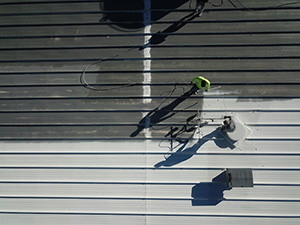
Commercial roof restoration in Canyon Lake, CA can be a practical way to extend the useful life of an existing roof when the roof is still a sound candidate for coating. Woolbright’s Roofing and Construction has served homes and commercial buildings in Southwest Riverside County and the Temecula Valley since 1988 and provides acrylic and silicone coating and restoration services.
The key question is not whether a coating can cover the roof. It is whether moisture, drainage, substrate condition, adhesion, compatibility, and needed repairs support restoration. A coating does not correct saturated insulation, damaged decking, persistent drainage defects, or widespread roof failure. Call 951-609-1818 to discuss an assessment for a Canyon Lake property.
Asset Management: The Role of Commercial Roof Restoration
Commercial roof restoration works best as a planned condition-based decision rather than a reaction to the first leak. A roof with regular inspections, documented condition assessments, and timely repairs is easier to budget for because the owner has a record of how the roof is changing over time.
Restoration may fit when the existing roof remains serviceable but needs repairs, preparation, and a compatible coating system. It should not be used to hide conditions that require a broader repair or replacement scope. Service life after restoration varies with the roof’s starting condition, coating system, preparation, weather exposure, maintenance, and later repairs, so any projected extension should be treated as project-specific rather than guaranteed.
When Restoration Is the Right Call and When It Is Not
The table below shows the main conditions that influence the decision. It is a planning guide, not a pass-or-fail test. Final suitability depends on the roof system, concealed conditions, repairs, preparation, and the selected coating system.
| Condition Checked | When Restoration May Fit | When Repair or Replacement Comes First |
|---|---|---|
| Moisture | Available evidence supports a serviceable assembly, or wet material is limited enough to be identified and corrected before restoration | Saturated insulation, widespread wet areas, or uncertain moisture extent could undermine the restoration scope |
| Adhesion and surface | The prepared surface can meet the selected coating system’s adhesion and preparation requirements | Loose, peeling, contaminated, blistered, or unstable material cannot provide a dependable base for the proposed system |
| Substrate and deck | Deck and surrounding materials remain serviceable after the repairs included in the scope | Soft, rotten, damaged, or unstable decking requires corrective work before coating is considered |
| Drainage | Water reaches drains, scuppers, or edges as intended after needed maintenance or repairs | Persistent ponding is caused by unresolved slope, deck, drain, or other drainage conditions |
| Compatibility | The selected coating system is compatible with the existing roof and prior materials after preparation | Existing materials, earlier coatings, or repairs cannot be prepared to meet the proposed system’s requirements |
If several conditions point toward broader repair or replacement, coating should not be treated as a shortcut. If the roof remains serviceable and the preparation and repair scope can be clearly defined, restoration may be a practical option to evaluate. Reflectivity and energy effects vary with the product, roof assembly, building envelope, HVAC system, and operating conditions, so no fixed savings percentage should be assumed.
How a Restoration Project Is Carried Out
A useful proposal should spell out the sequence instead of describing the job only as “coating the roof.”
- Assessment: inspect the membrane or existing roof surface, seams, flashing, penetrations, drainage, visible defects, and signs that concealed moisture may require additional investigation.
- Repairs: correct open seams, damaged flashing, punctures, failed details, and identified wet or unsound areas that are included in the scope.
- Preparation: clean and prepare the roof according to the selected coating system, including primer or other treatments where required.
- Application and acceptance: apply the specified coating to the written project requirements and review completed work against the selected system and agreed scope rather than one universal field test.
- Follow-up: retain project records and inspect the restored roof according to its condition, exposure, rooftop activity, severe weather, and any written maintenance requirements.
The Cost of Doing Nothing
Deferred maintenance can allow a limited defect to become a larger repair. A membrane crack, flashing separation, blocked drain, or puncture may let water reach insulation or the deck before an interior stain appears. Catching problems while the surrounding roof is still serviceable can preserve more options, including restoration. Once moisture or deterioration becomes widespread, the roof may no longer be a suitable restoration candidate.
What Woolbright’s Documentation Looks Like
Woolbright’s commercial roof assessment process includes documentation such as photos, condition ratings, and a drawing of the roof layout. Those records can help an owner understand current conditions and plan future work. For ongoing care, the existing Canyon Lake roof maintenance page and Woolbright’s maintenance programs provide related service information.

Commercial Roof Restoration Experts
Woolbright’s Roofing and Construction serves commercial property owners in Canyon Lake and the surrounding Southwest Riverside County and Temecula Valley service area. The company provides acrylic and silicone coating and restoration services along with commercial inspection, maintenance, repair, and other flat-roof work within its confirmed commercial scope.
If you are comparing contractors as well as scopes, see Woolbright’s page on commercial roofers in Canyon Lake. Call 951-609-1818 to discuss whether restoration fits the roof’s current condition.
Frequently Asked Questions
How do I know if my commercial roof is a good candidate for restoration?
Restoration is more likely to fit when the deck and surrounding materials remain serviceable, moisture is limited or correctable, drainage works properly, defects can be repaired, and the selected coating is compatible with the existing roof.
How does restoration compare in cost to full replacement?
Restoration can cost less than a tear-off and replacement when the existing roof qualifies, but the difference depends on roof size, condition, preparation, repairs, access, and the selected coating system.
Can a coating fix a roof that holds water or has wet insulation?
No. Coating does not correct the underlying cause of persistent ponding, and saturated insulation or damaged decking must be addressed as part of the appropriate repair or replacement scope.
How often should a restored commercial roof be inspected?
There is no single interval for every roof. Inspection timing should reflect roof condition, weather exposure, rooftop activity, maintenance requirements, and any significant storm or newly observed problem.