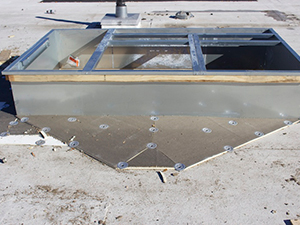
Single-ply roof repair should start by identifying the membrane and confirming how far the damage extends. TPO, EPDM and PVC are all single-ply systems, but their seams, patches and preparation methods differ. For a commercial or industrial building in Canyon Lake, California, a localized repair may be appropriate when the defect is defined and the surrounding membrane, insulation and substrate remain serviceable.
Woolbright’s Roofing & Construction provides commercial roof repair within Canyon Lake and the surrounding Temecula Valley service area. Call (951) 609-1818 to discuss an inspection and the roof condition that needs evaluation.
Why Single-Ply Roof Repair Matters
Single-ply roofs commonly use TPO, PVC or EPDM. These membranes can develop punctures, tears, open seams and failed flashing from weather exposure, rooftop activity, movement around penetrations, or aging details. Once water gets below the membrane, the repair decision depends on whether moisture is contained near the defect or extends into a larger area.
A ceiling stain or drip shows where water became visible inside the building, not necessarily where it entered the roof. The inspection should connect interior symptoms with roof-level evidence before the repair scope is set.
Repair Compatibility: TPO, EPDM and PVC
Membrane type matters because the repair materials and methods must be compatible with the roof that is already installed. The table below is a general guide; the actual roof condition and applicable system requirements determine the final method.
| Membrane | Typical Seam Method | Compatible Repair Considerations |
|---|---|---|
| TPO | Heat-welded thermoplastic seams | A repair generally uses compatible TPO membrane and heat-welded detailing on a properly prepared surface. Weathered material may require additional preparation before welding. |
| PVC | Heat-welded thermoplastic seams | A repair generally uses compatible PVC membrane and welded detailing. PVC and TPO are different materials and should not be treated as interchangeable repair membranes. |
| EPDM | Tape, adhesive, or other system-specific seam components | Repair can involve compatible EPDM patches, tape, primer, adhesive, or flashing materials applied to a properly prepared surface. |
If the membrane type is unknown, it should be identified before a repair material is selected. Compatibility, surface condition, contamination, prior repairs and weathering can all affect whether a localized patch or reseam is suitable.
Indications That Need Inspection

Water stains, dripping, visible membrane damage, open seams, lifting edges, punctures and failed flashing all justify prompt attention. None of those signs alone establishes the full repair scope. A trained roofing professional should inspect the roof using appropriate access and safety procedures rather than asking building staff to diagnose concealed conditions from the roof surface.
The inspection should determine whether the defect is localized and whether surrounding materials remain suitable for repair.
| Condition Checked | Evidence to Establish | Possible Scope Direction |
|---|---|---|
| Seams | Whether separation is isolated and nearby seams and membrane remain serviceable. | Localized seam repair when contained; broader assessment when similar failures repeat across the roof. |
| Penetrations | Whether the problem is confined to one vent, curb, drain, or equipment detail and whether adjacent roofing is affected. | Repair or rebuild the affected detail when surrounding materials remain suitable. |
| Flashing | Whether cracking, lifting, gaps, or deterioration are isolated or repeated along walls and edges. | Localized flashing work when limited; wider scope when deterioration extends along multiple details. |
| Moisture extent | Whether moisture is confined near the defect or extends into insulation, substrate, or multiple roof areas. | Localized repair when contained; additional investigation or broader scope when moisture extends beyond the repair area. |
Limits of a Localized Repair
A localized repair makes the most sense when the defect can be defined and the surrounding roof remains serviceable. It becomes less useful when wet insulation extends beyond the visible problem, similar defects appear in several areas, the membrane is deteriorated across a large section, or the substrate needs work that cannot be addressed within a small repair.
That does not automatically mean the roof needs replacement. It means the owner needs enough evidence to compare a larger repair, restoration, or replacement assessment against the condition actually found. Related system information is available on Woolbright’s Canyon Lake single-ply membrane page.
What a Single-Ply Repair Quote Should Include
A useful quote should identify the membrane type, repair location, observed defect, proposed method and materials, flashing work, preparation, major exclusions, and the process for approving additional work if concealed conditions change the scope. It should also explain how crews will access the roof and how work will be coordinated around an occupied commercial building.
If inspection findings show that the damage is broader than the quoted repair area, that change should be documented before the scope expands. Ongoing roof maintenance can then help track repaired areas, seams, flashings, penetrations and drainage conditions over time.
Single-Ply Roof Repair in Canyon Lake, CA
For commercial single-ply roof repair in Canyon Lake, Woolbright’s Roofing & Construction can inspect the roof, identify whether the membrane is TPO, PVC or EPDM, and define a repair scope based on the condition found. Reach Woolbright’s Roofing & Construction at (951) 609-1818 to discuss the roof problem.
Frequently Asked Questions
Can TPO, EPDM and PVC be repaired the same way?
No. TPO and PVC commonly use heat-welded thermoplastic repairs, while EPDM uses compatible rubber-system tapes, adhesives, primers, patches, or flashing materials. The method needs to match the membrane and roof condition.
How do I know which single-ply membrane my roof has?
A roofing professional can identify the membrane during an inspection by reviewing the material, seams, details, and available roof records before a repair method is selected.
Can a single-ply roof be repaired instead of replaced?
Often, localized damage can be repaired when surrounding membrane, insulation, and substrate remain serviceable. Widespread moisture or repeated deterioration may require a broader assessment before the scope is set.
What should a single-ply repair quote include?
It should identify the membrane, repair area, proposed method and materials, flashing work, preparation, exclusions, roof-access planning, and how added work will be approved if new conditions are discovered.