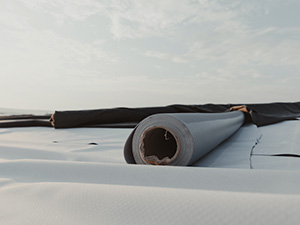
When an aging commercial roof in Canyon Lake, CA needs more than another small repair, the next decision is not automatically a full tear-off. A single-ply membrane recover may be possible on some roofs, while others need removal of existing materials before a new system is installed. The useful question is whether the existing roof, drainage, insulation, attachment conditions, rooftop activity, and detailing support the proposed approach.
Woolbright’s Roofing and Construction has served commercial property owners in Southwest Riverside County and the Temecula Valley for more than 37 years and installs TPO, PVC, and EPDM single-ply systems. Call 951-609-1818 to discuss the roof condition and the system being considered.
Single-Ply Membrane: Re-Roofing Over Existing Systems
A single-ply recover installs a new membrane over an existing roof assembly instead of removing every existing layer first. Whether that approach is suitable depends on the actual roof. Existing layers, moisture, insulation, deck condition, attachment, drainage, applicable requirements, and the selected roofing system can all change the scope. A recover should therefore be supported by inspection findings and a written design, not by the assumption that avoiding tear-off is always better.
What Qualifies a Roof for an Overlay
The table below shows the main questions an owner should expect the contractor to address before recommending a recover instead of tear-off.
| Factor | What to Confirm | Why It Matters |
|---|---|---|
| Substrate and existing layers | Condition of the deck, existing roofing layers, prior repairs, and any deterioration that would remain below the new system | Unsuitable or deteriorated materials can require removal or corrective work before a new membrane is installed |
| Moisture and insulation | Available evidence about concealed moisture, insulation condition, and whether additional investigation is needed | Wet or damaged materials can change whether a recover is appropriate and what must be removed or replaced |
| Drainage | Slope, drains, scuppers, low areas, and any recurring ponding condition | A new membrane does not correct the underlying cause of poor drainage |
| Attachment method | Whether the proposed attachment method is compatible with the deck, existing assembly, selected membrane, and project design | Attachment affects how the system is installed and what preparation or fastening conditions are required |
| Rooftop activity | Foot traffic, equipment service, access routes, and any grease or chemical exposure relevant to the roof | Traffic and exposure can affect membrane selection, detailing, and whether walkway protection is appropriate |
| Detailing | Condition of flashing, curbs, penetrations, edges, terminations, and transitions that must tie into the new membrane | The new roof has to integrate with these details rather than simply cover the field of the existing roof |
| Service access | Roof access, staging, deliveries, equipment needs, and coordination around an occupied building | Access and sequencing can affect project cost, schedule, and building operations |
If the inspection identifies widespread moisture, unsuitable existing layers, damaged supporting materials, unresolved drainage, or another condition that conflicts with the selected system, a tear-off or larger corrective scope may be more appropriate. Applicable code and manufacturer requirements also need to be checked for the specific building rather than reduced to one universal layer-count rule.
TPO, EPDM and PVC: Choosing the Right Membrane
Woolbright’s installs TPO, PVC, and EPDM single-ply systems. Those membranes are not interchangeable, and their seam and repair methods differ. That matters both during installation and when the roof needs service later.
| Membrane | Seam Approach | Repair Compatibility | Selection Question |
|---|---|---|---|
| TPO | Thermoplastic seams are heat-welded | Repairs use compatible TPO materials and preparation appropriate to the existing membrane | Does a thermoplastic membrane with welded seams and the selected surface characteristics fit the building and project requirements? |
| PVC | Thermoplastic seams are heat-welded | Repairs use compatible PVC materials; PVC and TPO repair materials are not treated as interchangeable | Do the selected PVC product’s exposure limits and properties fit the building, including any relevant grease or chemical conditions? |
| EPDM | Seams use compatible tape or adhesive systems rather than thermoplastic heat welding | Repairs use compatible EPDM primers, tapes, patches, adhesives, or flashing materials as required by the repair system | Do the membrane characteristics, attachment, detailing, and maintenance approach fit the roof and owner’s priorities? |
The best choice depends on the building, existing roof, drainage, rooftop use, attachment requirements, budget, and maintenance plan. Reflective surfaces, welded seams, flexibility, or resistance to particular exposures can all matter, but none of those benefits should be treated as enough by itself to select a membrane. For repair-focused information, see Woolbright’s single-ply roof repair guide for Canyon Lake and its page on PVC roof repair.

What the Contractor Should Confirm in Writing
A useful proposal should identify whether the project is a recover or tear-off, the existing roof conditions supporting that decision, the named membrane and relevant system details, the attachment method, insulation work, flashing, drainage, penetrations, and any exclusions or allowances for concealed conditions. It should also explain access and scheduling around the building and how added work will be documented and approved if hidden moisture or deterioration is discovered.
Any manufacturer or workmanship coverage should be stated separately in writing. Manufacturer eligibility for a recover can depend on the selected product, roof condition, preparation, installation, inspection, and other system requirements. Do not assume a particular warranty term or coverage level from the fact that a single-ply system is being installed.
The Tradeoffs of Skipping Tear-Off
A recover can reduce some demolition, disposal, and exposure associated with removing the existing roof, but the actual cost and schedule difference depends on preparation, concealed conditions, added insulation, attachment, drainage corrections, and the selected system. Keeping the old roof in place does not automatically make the project faster, less expensive, or less disruptive.
A commercial roof inspection in Canyon Lake can help document the existing condition before the owner compares recover and tear-off proposals.
Canyon Lake Single-Ply Roofing Experts
Woolbright’s Roofing and Construction serves commercial property owners in Canyon Lake and Southwest Riverside County. If you are comparing a single-ply recover with tear-off and replacement, ask the contractor to show how the existing roof condition, membrane selection, attachment, insulation, drainage, and detailing support the proposed scope. Call 951-609-1818 to discuss the building.
FAQ
How do I know if my existing roof can support a single-ply overlay?
An inspection should evaluate existing layers, moisture, insulation, deck condition, drainage, attachment requirements, and the selected system. A recover is appropriate only when those conditions and the applicable project requirements support it.
Will a single-ply overlay qualify for a manufacturer warranty?
It can, but eligibility depends on the manufacturer, product, existing roof, preparation, installation, inspection, and written system requirements. Ask for the specific terms that apply to the proposed roof.
Which single-ply membrane is best: TPO, EPDM or PVC?
None is best for every roof. TPO and PVC use heat-welded seams, while EPDM uses compatible tape or adhesive systems. The right choice depends on the building, roof condition, attachment, exposures, detailing, and maintenance plan.
How long does a single-ply membrane roof last?
There is no universal service life for every project. Performance depends on the membrane, installation, roof assembly, exposure, drainage, maintenance, rooftop activity, and later damage.