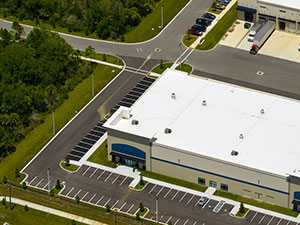
A TPO roofing system can be a practical option for some commercial buildings in Hemet, CA, but the decision should follow the building, roof condition, attachment requirements, drainage, and maintenance needs rather than a generic claim about savings or lifespan. Woolbright’s Roofing & Construction installs TPO and other single-ply systems for commercial properties in Southwest Riverside County and the Temecula Valley. Call 951-609-1818 to discuss an evaluation.
TPO Roofing System Concerns
What is the Purpose of Installing a TPO Roofing System?
TPO is a single-ply membrane commonly used on flat and low-slope commercial roofs. A white TPO surface can reflect more solar energy than a dark roof surface, which may reduce roof heat gain. Actual building-level cooling savings depend on the existing roof, insulation, HVAC system, roof area, operating conditions, and sun exposure, so energy performance should be evaluated for the specific property rather than assumed.
Building owners should also consider the reason for changing the roof system. Active leaks, damaged seams, ponding, deteriorated insulation, rooftop traffic, or repeated repairs can each affect whether TPO installation is appropriate and what preparation is needed before the membrane is installed.

Is My Existing Roof Compatible with TPO Installation?
The condition of the existing roof and deck matters before a TPO system is specified. Some projects may allow a new assembly over a suitable existing roof, while others require tear-off because of moisture, deteriorated insulation, deck damage, incompatible materials, or project requirements. These conditions should be documented before the installation plan is approved.
TPO membranes can be mechanically attached or fully adhered, and other assembly approaches may be available depending on the project. The appropriate attachment method depends on the roof deck, insulation package, building conditions, wind design, membrane system, and whether the project is a recover or full tear-off. The proposal should identify the planned attachment method and explain why it fits the building.
Drainage should be evaluated separately from the membrane choice. A TPO roof does not correct inadequate slope, blocked drains, undersized drainage components, or structural deflection by itself. If ponding has been a recurring problem, ask how that condition will be addressed in the project scope.
How Do Welded Seams Affect TPO Performance?
TPO sheets are joined with heat-welded seams. Seam quality depends on surface preparation, equipment settings, overlap, ambient conditions, and technician technique. A completed seam should be checked as part of installation quality control rather than assumed sound simply because it looks uniform from above.
When TPO is repaired later, compatible membrane patches and heat welding may be used where the existing material is suitable for repair. The repair method should follow the membrane condition and system requirements, with the completed weld checked for continuity.
What Maintenance Does a TPO Roof Need?
A TPO roof still needs periodic inspection and maintenance. Areas worth reviewing include seams, flashing, penetrations, drains, scuppers, debris, ponding locations, rooftop traffic areas, and places disturbed by later mechanical or service work.
There is no single inspection schedule that fits every building. Frequency should reflect roof age, system condition, weather exposure, rooftop activity, leak history, drainage, and any applicable warranty or maintenance requirements.
What Should a TPO Proposal Explain?
A useful proposal should identify the membrane system, attachment method, insulation work, flashing details, tear-off or recover approach, drainage-related work, exclusions, and how concealed damage will be handled if it is discovered. It should also explain what closeout and warranty documentation will be provided when applicable.
What to Verify Before Accepting the TPO Installation
Before approving the completed project, confirm that the installed scope matches the proposal. That can include the membrane system, attachment method, insulation changes, flashing work, drainage-related items, and any concealed conditions that changed the original plan. If the project required repairs to the deck or insulation after tear-off, those locations should be documented rather than left as an undocumented field change.
Keep the closeout information with the building’s roof records. Useful documents can include installation photos, product and warranty information when applicable, approved change records, and notes about maintenance-sensitive areas such as penetrations, drains, rooftop equipment, or high-traffic zones. Those records give future inspectors a clearer baseline and make it easier to distinguish a new issue from a condition that was already addressed.
TPO Roofing System Experts
Woolbright’s Roofing & Construction has served homes and commercial buildings throughout Southwest Riverside County and the Temecula Valley since 1988 and provides TPO, PVC, and EPDM single-ply installation along with general commercial roofing services.
For a Hemet commercial property, the strongest TPO decision is one tied to the actual roof assembly, drainage, attachment needs, seam quality, and maintenance expectations. Contact Woolbright’s Roofing & Construction at 951-609-1818 to discuss whether TPO fits the building and what the proposed installation should include.
Frequently Asked Questions
What is a TPO roofing system made of?
TPO is a reinforced thermoplastic single-ply roofing membrane used on many flat and low-slope commercial roofs.
Can TPO be repaired if it is damaged?
Often, yes. Compatible TPO patches can be heat welded where the existing membrane remains suitable for repair, and the completed weld should be checked for continuity.
Does TPO automatically lower energy costs?
No. Reflective TPO can reduce roof heat gain compared with darker surfaces, but actual energy savings depend on the building’s insulation, HVAC system, roof area, use, and climate exposure.
How often should a TPO roof be inspected?
There is no universal interval. The inspection plan should reflect roof condition, age, drainage, exposure, rooftop traffic, leak history, and applicable warranty or maintenance requirements.