EPDM, commonly called rubber roofing, is a flexible single-ply membrane used on many commercial low-slope roofs. When an EPDM roof develops a leak or visible defect, the repair method needs to match the membrane and the specific failure rather than borrow a generic flat-roof repair method. Woolbright’s Roofing & Construction has served Southern California since 1988 and provides commercial roofing services in Perris. Call (951) 609-1818 to discuss an EPDM roof condition.
Common EPDM Rubber Roof Problems
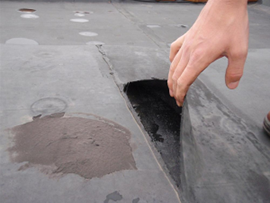
EPDM roofs can develop problems at seams, flashing, penetrations, edges, drains, previous repair areas, or the field membrane. Some conditions are easy to see, while others require a closer professional assessment to determine whether the visible symptom is the actual source of water entry.
Why Choose Us
- 37+ years’ experience
- Fully licensed & insured
- Complete roofing solutions
- Commercial roofing experience
- Family owned & operated
Conditions that may require evaluation include:
- Improper or incompatible prior repairs
- Ponding water or drainage concerns
- Cracks, punctures, blisters, or bubbles
- Loose or deteriorated seams
- Membrane shrinkage or movement
- Flashing or penetration defects
- Suspected trapped moisture
- Aging and weathering
- Debris or contamination affecting the membrane
A list of symptoms does not determine the repair by itself. The contractor should identify the roof system, locate the defect, evaluate the surrounding membrane, and explain whether concealed moisture, insulation condition, substrate damage, or drainage needs further investigation before the scope is approved.
EPDM Repair Methods Are Different From PVC and TPO Repairs
EPDM is not a thermoplastic membrane, so it is not repaired with the same heat-welded seam method commonly used on TPO or PVC roofs. EPDM repairs typically rely on compatible primers, seam tape, adhesives, uncured or cured EPDM flashing materials, patches, or other products approved for the existing rubber membrane and the detail being repaired.
That distinction matters because a repair product intended for a different membrane can be incompatible with EPDM or with an existing coating, adhesive, or surface condition. The contractor should confirm the membrane type and the compatibility of the proposed repair system before work begins.
Localized seam separation, a puncture, or an isolated flashing defect may support a focused repair when the surrounding membrane remains serviceable. Widespread shrinkage, extensive moisture, repeated failures, or broader substrate deterioration may justify additional investigation before more patching is authorized. None of those conditions creates an automatic replacement rule without a roof-specific assessment.
Why Diagnosis Matters Before the Repair Is Chosen
Interior staining does not always sit directly below the roof entry point. Water can move through insulation, along the deck, or around penetrations before it becomes visible inside. For that reason, the repair decision should connect the observed symptom to a confirmed or well-supported roof defect rather than simply patching the area above a ceiling stain.
If the source remains uncertain, the contractor should say what additional inspection or testing is needed and what that work can and cannot establish. That keeps a localized repair from being presented as more certain than the evidence supports.
What a Rubber Roof Repair Scope Should Explain
A useful repair proposal should identify the confirmed defect, preparation steps, repair materials, affected roof area, exclusions, and any conditions that could expand the work. If concealed damage is possible, the proposal should explain how additional findings will be documented, priced, and approved.
Owners should also ask how the repaired area will be documented at closeout. Photos, repair locations, materials used, approved changes, and follow-up recommendations can make future maintenance easier and provide a clearer record of what was actually addressed.
Service Terms Should Be Documented

Woolbright’s current website identifies Choice Roof among its affiliates and lists extended warranty options, but any lifetime-service or continuing-service promise should be evaluated from the written agreement that applies to the specific project. Coverage, exclusions, responsible parties, transfer terms, maintenance requirements, and claim procedures should come from the actual documents rather than general marketing language.
If a proposal includes a service guarantee or association-backed benefit, ask for the written terms before relying on it. That makes it possible to distinguish contractor workmanship obligations from separate material, system, or association terms.
Schedule a Rubber Roof Assessment
Call for Information
For a commercial EPDM roof in Perris, the repair decision should be based on the actual membrane, defect, moisture condition, drainage, surrounding roof condition, and compatible materials. Woolbright’s Roofing & Construction provides commercial single-ply roofing services, including EPDM, and can help determine whether a localized repair, additional investigation, restoration, or a broader roofing scope is appropriate.
Frequently Asked Questions
Can an EPDM rubber roof be heat-welded like TPO or PVC?
No. EPDM is not a thermoplastic membrane. Repairs generally use EPDM-compatible primers, seam tape, adhesives, patches, or flashing materials rather than thermoplastic heat welding.
How do I know whether an EPDM roof problem can be repaired?
That depends on the confirmed defect and the condition of the surrounding membrane, insulation, substrate, drainage, and prior repairs. Localized damage may be repairable, while broader deterioration may require further evaluation.
How often should an EPDM roof be inspected?
There is no universal inspection interval for every roof. The appropriate schedule depends on the roof condition, written warranty or maintenance requirements, building use, weather events, and prior repair history.
What should I verify about a service guarantee or warranty?
Review the written terms for coverage, exclusions, duration, maintenance obligations, responsible parties, and claim procedures before relying on any general guarantee language.