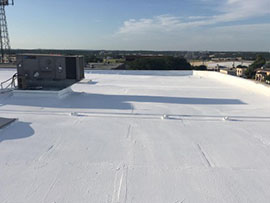
A commercial roof coating can be a practical restoration option when the existing roof is still a suitable base, but coating is not a fix for every roof problem. For a Corona, CA property, the decision should start with the condition of the substrate, drainage, existing moisture, surface preparation, and compatibility with the proposed coating system. Woolbright’s Roofing & Construction can be reached at (951) 609-1818 to discuss whether a commercial roof is a coating candidate.
When Roof Coating Can Make Sense
Coating is most useful when the roof remains structurally serviceable and the problems that need attention can be corrected within a restoration scope. That can include compatible surface wear, limited flashing or seam repairs, weathered areas, and other conditions that can be prepared and repaired before the coating is applied.
Woolbright’s current commercial scope includes acrylic and silicone coatings and restoration. The choice between coating and broader work should still depend on the actual roof assembly, existing materials, drainage, moisture condition, adhesion, and the repairs required before application.
For another example of how Woolbright’s discusses restoration options, see its information on commercial roof coatings.
Conditions a Roof Coating Does Not Fix on Its Own
Why Choose Us
- 37+ years’ experience
- Fully licensed & insured
- Complete roofing solutions
- Superior knowledge & expertise
- Family owned & operated
A coating should not be used to hide conditions that require a different repair scope. Structural deterioration in the roof deck or supporting components must be evaluated and corrected independently. A coating can protect a prepared surface, but it does not restore damaged structural framing.
Drainage is another separate issue. If low areas, blocked drains, slope problems, or other conditions cause recurring ponding, the contractor should determine whether drainage work is required before coating. Coating does not change the roof geometry or correct the reason water is collecting.
Moisture below the surface also needs careful evaluation. Suspected or confirmed wet insulation, damp substrate, or concealed deterioration can make a roof unsuitable for coating until the affected materials are investigated and addressed. A surface observation or screening result should not be treated as proof of the full moisture extent by itself.
Check Adhesion, Compatibility, and Preparation
Even a roof that appears serviceable can be a poor coating candidate if the proposed system will not adhere properly to the existing surface. Previous coatings, dirt, oils, loose material, weathered surfaces, repairs, and incompatible materials can all affect preparation and adhesion.
The proposal should explain how the roof will be cleaned and prepared, what repairs are required first, and why the selected coating is compatible with the existing roof. If adhesion testing or other project-specific verification is required, the scope should explain what will be checked and how the results affect the recommendation.
Roof Coating Benefits Should Be Framed Realistically

On a suitable roof, a coating can create a continuous protective surface, reduce direct weather exposure, and postpone broader work when the underlying assembly remains serviceable. It can also involve less removal than a full replacement project, depending on the repairs and preparation required.
Reflective coatings can reduce solar heat gain at the roof surface, but they do not guarantee a specific reduction in utility costs. Actual building energy use depends on insulation, HVAC operation, building use, roof area, climate, and other conditions.
Coatings can also be recoated in some situations, but future recoating should not be promised automatically. The roof must still be a suitable candidate at that time, and the next scope should follow the condition of the existing coating, substrate, drainage, moisture, and written system requirements.
What Should the Coating Proposal Include?
A useful proposal should identify the roof area, existing substrate, required repairs, surface preparation, coating system, application requirements, flashing or penetration work, drainage-related work, exclusions, and the process for handling concealed conditions. It should also explain what documentation will be provided at closeout and what maintenance responsibilities apply afterward.
Warranty terms should come from the actual written documents rather than a general promise about service life. Ask what is covered, what is excluded, what maintenance is required, and who is responsible for each part of the warranty.
Plan Follow-Up Maintenance Around the Actual Roof
After coating, inspection and maintenance should follow the roof condition, rooftop activity, drainage, prior repairs, and any written system or warranty requirements. There is no single universal maintenance interval for every coated roof.
Woolbright’s related page on roof maintenance in Corona provides additional context on ongoing roof care. The important point is that maintenance should help document developing conditions and preserve a useful history of the roof rather than relying on a generic schedule alone.
Roof Coating Evaluation in Corona, CA
The right question is not whether coating is always better than replacement. It is whether the existing roof is dry enough, sound enough, compatible, and properly prepared for a coating system. Structural condition, drainage, moisture, adhesion, repair needs, and written scope should all be resolved before the project is approved.
Call for Information
Call Woolbright’s Roofing & Construction at (951) 609-1818 to discuss a commercial roof coating assessment in Corona, CA.
Frequently Asked Questions
Will a roof coating fix any commercial roof problem?
No. Structural damage, unresolved drainage problems, and wet or deteriorated concealed materials need their own evaluation and corrective work before coating is considered.
Can a roof be coated if there is ponding water?
Ponding conditions need to be evaluated for the actual roof and proposed system. Coating does not correct low areas, blocked drainage, or other causes of recurring water accumulation.
How do I know whether trapped moisture is present?
A professional assessment can identify areas that need further investigation, but surface observations or screening findings do not prove the full extent of concealed moisture by themselves.
Can a roof coating lower energy costs?
A reflective coating can reduce solar heat gain at the roof surface, but actual utility savings depend on the full roof assembly, insulation, HVAC operation, building use, and climate.