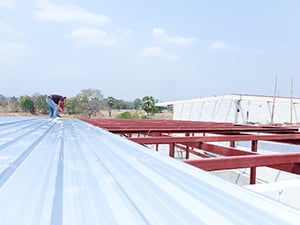
For a commercial building in Bismarck, ND, a standing seam metal roof is one of several metal options, and the best choice depends on the building, the roof, and how it will be maintained. The key question is which metal roof design and project conditions should guide the system choice. Standing seam panels use concealed fasteners and clips, while exposed-fastener panels are screwed through the face. Eagle Eye Roofing Systems provides commercial roofing services in Bismarck. This overview explains standing seam design differences and the project questions to resolve with a roofing professional before choosing a system.
For a discussion of your commercial roof condition and available roofing services, contact Eagle Eye Roofing Systems at (701) 202-7280. Confirm with the contractor responsible for a metal-roof proposal that standing seam installation and the specific assembly are within its scope.
Risk Reduction Benefits
Risk reduction with metal roofing is real but conditional. These are the areas where design and installation make the difference:
Weather resistance. Performance in wind and storms depends on the tested panel and clip assembly, the attachment, the substrate, and the quality of the edge and flashing details. Be cautious of any single wind-speed number that is not tied to a specific tested assembly and your building’s conditions. Metal panels also shed water and snow, but snow and ice sliding off a smooth roof can be a hazard to entrances and equipment, so ask whether snow retention is part of the design.
Leak points. Concealed fasteners remove many exposed fastener holes from the field of the roof. Leaks then tend to concentrate at transitions, such as curbs, penetrations, valleys, and edges, so those details deserve the most attention in the specification.

Fire performance. Metal is a non-combustible roof covering, but the fire classification applies to the tested roof assembly, not to metal in general. Ask for the classification of the specific system proposed.
Service life. Metal roofs can last a long time when designed and maintained well, but no universal lifetime applies. The panel finish, the sealants, the flashings, and the building’s exposure all affect how long the system performs.
Insurance and energy. Some insurers consider roof type when pricing a policy, and reflective finishes can reduce roof heat gain. Both depend on the insurer, the product, and the building, so ask your insurer and request the product data instead of relying on a general percentage.
Exposed-Fastener or Standing Seam?
The table compares the main design considerations. It is a general guide, and the right answer depends on the building and the product.
| Consideration | Exposed-fastener panels | Standing seam (concealed fastener) |
|---|---|---|
| Fastening | Screws pass through the panel face and rely on washers or gaskets that can age | Panels are commonly held by concealed clips or fastening details, depending on the product |
| Movement with temperature | Panels are pinned by through-fasteners, so movement can load the fastener holes over time | Appropriately designed concealed clips can accommodate thermal movement, depending on the panel and assembly |
| Roof geometry | Panel suitability depends on roof slope, dimensions, penetrations and assembly requirements | Details around hips, valleys, curbs, and penetrations need careful design and custom flashing |
| Flashing and penetrations | More exposed fasteners and sealant points at ridges, edges, and openings | Fewer exposed fasteners on the field, but each transition still needs a compatible detail |
| Substrate and structure | Needs a sound deck or purlins and correct fastener spacing | Needs a suitably flat substrate and clips fastened into sound structure |
| Maintenance access | Fasteners and sealants typically need periodic checking | Seams, clips, and flashings still need periodic inspection; foot traffic and snow movement should be planned for |
Standing seam systems can cost more to install than exposed-fastener panels; the value depends on the assembly, flashing, clip design, installation quality and ongoing maintenance. For a broader overview, see the page on standing seam metal roof benefits.
Project Conditions That Should Guide the Choice
- Existing roof and deck: the condition of the structure, the substrate, and whether the current roof is removed or covered.
- Roof geometry: slope, valleys, hips, and how many curbs and penetrations the roof has.
- Loads and exposure: snow, wind, and drift areas around parapets and rooftop equipment.
- Drainage: where water and snowmelt leave the roof, and whether gutters or scuppers can handle it.
- Maintenance access: safe access for inspections, and a plan for foot traffic and rooftop equipment service. An inspection before design can document the existing roof and structure.
Questions to Ask for a Written System Specification
- What panel profile, gauge, and finish are proposed, and why do they suit this building?
- What clip type and spacing are used, and how do they allow for panel movement?
- How are the substrate and structure checked or prepared?
- What flashing and sealant details are used at edges, curbs, penetrations, and valleys?
- Is snow retention included, and where?
- What fire, wind, and other classifications apply to the proposed assembly, and what documentation supports them?
- What are the warranty terms, who provides them, and what maintenance do they require?
- What does the maintenance plan include? Commercial roof maintenance in Bismarck and storm-related checks (see roof storm damage in Bismarck) help keep seams, flashings, and sealants in good condition.
Evaluating a Standing Seam Metal Roof in Bismarck
Standing seam can be a suitable option when the building, the budget, and the maintenance plan fit the specified assembly. A contractor who provides a written specification, explains the tradeoffs with exposed-fastener panels, and ties each claim to a specific product is giving you what you need to decide. For commercial roofing questions in Bismarck, ND, call Eagle Eye Roofing Systems at (701) 202-7280. Obtain the standing seam system specification from the contractor responsible for that installation.
Standing Seam Metal Roof FAQs
How long do standing seam metal roofs last?
It depends on the panel finish, the details, the building’s exposure, and how well the roof is maintained. Ask for the product’s stated performance and warranty terms in writing instead of relying on a general number of years.
How does standing seam compare with exposed-fastener metal roofing?
Standing seam panels generally conceal their fasteners and may use clips designed for thermal movement, while exposed-fastener panels are screwed through the face and rely on washers that need periodic checking. Standing seam often costs more to install, and both types depend on good flashing and installation.
Can a metal roof lower my insurance costs?
Sometimes, but it depends on your insurer, the policy, and the roof’s tested classifications. Ask your agent before assuming a discount.
What should a metal roof specification include?
The panel and finish, clip type and spacing, substrate preparation, flashing details, snow retention, applicable classifications, warranty terms, and a maintenance plan.