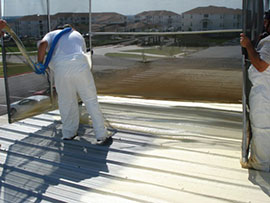
Commercial metal roof repair should address more than the visible leak. The repair method needs to match the roof’s attachment system, account for panel movement, use compatible sealants and fasteners, and be performed with appropriate safety planning. Woolbright’s Roofing & Construction has served Southwest Riverside County and the Temecula Valley since 1988. For metal roof repair in Temecula, California, call 951-609-1818.
Before a repair scope is approved, the roof should be evaluated for the actual defect and surrounding conditions. A commercial roof inspection in Temecula can help document seams, fasteners, flashing, penetrations, drainage, previous repairs, and signs that moisture may extend beyond the most visible problem.
Established Commercial Roofing Company
Why Choose Us
- 37+ years of local roofing experience
- Family owned and operated
- California license #1146711, C-39 and B
- Commercial repair, inspection, maintenance, and restoration experience
- Serving the Temecula Valley and Southwest Riverside County
Commercial roof work can involve fall hazards, rooftop equipment, access limitations, and occupied areas below. A contractor should be able to explain how access, fall protection, staging, and site-specific hazards will be managed before work begins. Woolbright’s current public site lists California contractor license #1146711 with C-39 and B classifications. Property owners should still verify current license status directly and ask for current insurance documentation as part of normal contractor due diligence.
Credentials are only one part of the decision. For metal roof repair, the contractor should also be able to explain how the proposed repair fits the existing metal system. Woolbright’s commercial roofing contractor guidance for Temecula provides additional questions owners can use when reviewing a contractor and written scope.
Fastening, Sealing, and Thermal Movement
Metal roofs do not all attach in the same way. Exposed-fastener systems use fasteners that penetrate the panel, while standing-seam systems commonly use concealed clips and details intended to allow movement. A repair should respect the system already in place. Substituting an incompatible fastener, over-tightening a fastener, or rigidly fixing a detail that needs to move can create new stress or leak points.
Sealants and gaskets also need system-specific attention. Aging sealant around fasteners, laps, flashing, and penetrations can contribute to leaks, but simply adding more sealant is not always the correct repair. The existing material, panel finish, joint design, and expected movement should guide product selection and surface preparation. A written scope should identify what will be removed, cleaned, resealed, replaced, or monitored rather than relying on a generic “seal the leak” description.
Thermal movement is another important factor. Metal panels expand and contract as temperatures change. Repairs at seams, clips, penetrations, and transitions should allow the roof to continue moving as designed. A rigid patch can fail if it restrains movement that the original roof system was built to accommodate.
Metal Roof Repair Mistakes

- Choosing a contractor without checking current credentials. Verify the contractor’s current license and ask for applicable insurance documentation before work begins. Do not rely on an old website badge, an expired number, or a verbal assurance alone.
- Treating every metal roof the same. Ask how the repair will match the existing attachment method, fastener type, panel profile, flashing, and movement details.
- Using sealant as the entire repair plan. Sealant can be part of a repair, but the contractor should identify the underlying defect and confirm that the proposed material is compatible with the existing roof surface and joint movement.
- Ignoring the surrounding roof condition. A localized leak can sometimes be repaired locally, but repeated defects, widespread fastener or seam problems, or evidence of moisture beyond the immediate area may require a broader assessment before the scope is set.
A useful proposal should identify the affected area, repair method, preparation, materials, access needs, exclusions, and how additional work will be approved if concealed conditions are found. If the problem appears broader than a localized repair, the contractor should explain whether maintenance, restoration, or another roofing scope deserves comparison. Woolbright’s commercial roofing services in Temecula page provides more context on the company’s broader commercial work.
Call for Information
Metal Roof Repair in Temecula, CA
For a Temecula commercial property, a sound metal roof repair should be based on the roof system that is actually installed and the conditions found during inspection. Fastening, sealing, thermal movement, safety planning, and contractor credentials all deserve review before work begins.
Contact Woolbright’s Roofing & Construction at 951-609-1818 to discuss a commercial metal roof repair evaluation.
Frequently Asked Questions
Does the fastening system matter during a metal roof repair?
Yes. Exposed-fastener and standing-seam systems use different attachment details, and the repair should match the existing system rather than introduce incompatible fasteners or restraints.
Can sealant alone fix a leaking metal roof?
Sometimes sealant is part of the repair, but it should not substitute for identifying the actual defect. Compatibility, preparation, joint design, and expected movement all matter.
Why does thermal movement matter on a metal roof?
Metal panels expand and contract as temperatures change. Repairs that prevent intended movement can crack, loosen, or create stress at seams, fasteners, and penetrations.
What should I verify before hiring a metal roof repair contractor?
Verify current licensing, request applicable insurance documentation, and ask how the contractor will handle the roof’s fastening, sealing, movement, access, and safety requirements.