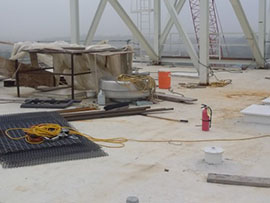
Flat roof repair in Corona, CA should start with the cause of the problem, not just the symptom visible on the surface. Ponding water, open seams, punctures, flashing defects, and areas of sagging can look related, but they do not call for the same repair. Woolbright’s Roofing & Construction has served Southern California for more than 37 years and provides commercial flat roof repair, inspection, maintenance, restoration, and replacement services. Call (951) 609-1818 to discuss the condition of your roof and the next step.
Different Flat Roof Problems Need Different Repairs
Call for Information
Flat and low-slope roofs are common on commercial buildings because they can make rooftop equipment easier to access and allow efficient use of building space. They also depend heavily on drainage, membrane condition, seams, flashings, and penetrations. When one of those details fails, the repair should match the actual defect and the roofing system already in place.

Ponding water. Water that remains on a roof after rainfall can point to blocked drainage, low areas, insulation compression, deck movement, or another slope-related condition. A surface patch may stop water from entering at one point, but it does not correct the reason water is collecting. The repair decision should consider drains, scuppers, slope, substrate condition, and any wet materials below the membrane.
Seam and flashing problems. Open seams and failed flashing details can allow water into a roof assembly, but the repair materials and preparation must be compatible with the existing system. TPO, PVC, modified bitumen, EPDM, and other roof types use different repair methods and products. A generic sealant or patch should not be assumed to work on every membrane.
Punctures and localized membrane damage. Damage from foot traffic, tools, equipment work, or debris may be limited to a small area. If the surrounding membrane and insulation remain sound, a compatible localized repair may be appropriate. The damaged area still needs to be checked for moisture intrusion before it is closed up.
Sagging or widespread movement. Visible depressions or movement can indicate a problem below the roof surface, including wet insulation, deck deterioration, or structural movement. Those conditions should be evaluated before any surface repair is treated as complete.
Professional Assessment Should Define the Scope
A useful repair assessment should identify the roof system, locate the defect, determine how far the damage extends, and note whether moisture or drainage conditions may be contributing to the problem. That helps separate a repairable surface issue from a broader condition that may require restoration or replacement.
The assessment should also document limitations. Some conditions below the membrane cannot be confirmed from a visual surface review alone. When the evidence suggests hidden moisture or deck damage, additional investigation may be appropriate before a final repair scope is approved.
Repair Materials Must Match the Existing Roof
Compatibility matters because commercial roof systems are not interchangeable. A repair material that adheres well to one membrane may perform poorly on another, and previous coatings or repairs can change the preparation required. Cleaning, primers, welding, adhesives, reinforcement, and patch materials should follow the requirements of the existing roof and the repair system being used.
Warranty terms can matter too. Using an incompatible product or repair method may affect manufacturer coverage, so building owners should review the applicable warranty requirements before approving work when warranty coverage is still active.
Follow-Up Matters After the Repair
A completed repair should leave the owner with a clear record of what was found and what was done. That record can include the repair location, materials or method used, photographs, and any nearby conditions that should be watched during future maintenance visits.
A follow-up inspection window should be based on the defect, weather exposure, roof condition, and repair type rather than a universal schedule. A repaired seam near recurring ponding, for example, may deserve closer attention than an isolated puncture on an otherwise stable roof.
Why Choose Woolbright’s Roofing & Construction
Why Choose Us
- 37+ years’ experience
- Fully licensed & insured
- Complete roofing solutions
- Superior knowledge & expertise
- Family owned & operated
Woolbright’s Roofing & Construction is a family-owned Southern California roofing company with more than 37 years in business. Current company information also supports full licensing, bonding and insurance, BBB A+ accreditation, maintenance plans, extended roof warranty options, and detailed roof reporting. Those credentials do not replace a roof-specific diagnosis, but they give commercial property owners a documented basis for evaluating the contractor performing the work.
If your Corona commercial roof has ponding, seam separation, membrane damage, recurring leaks, or suspected sagging, call (951) 609-1818 for a professional assessment and repair recommendation.
Frequently Asked Questions
What is the most common cause of a flat roof leak?
There is no single cause. Seam defects, flashing problems, punctures, drainage issues, and ponding can all contribute, so the repair should follow an inspection of the specific roof.
How do I know whether a flat roof needs repair or replacement?
Localized damage may support a targeted repair when the surrounding roof remains sound. Widespread moisture, deck damage, repeated failures, or broad deterioration can point toward a larger scope.
Why does repair-material compatibility matter?
Commercial membranes use different repair products and preparation methods. A patch or sealant that works on one roof type may not bond correctly to another.
What should happen after a flat roof repair?
Keep a record of the repair location, work performed, and any nearby conditions that need monitoring. Follow-up timing should reflect the defect, roof condition, and exposure rather than a fixed schedule.