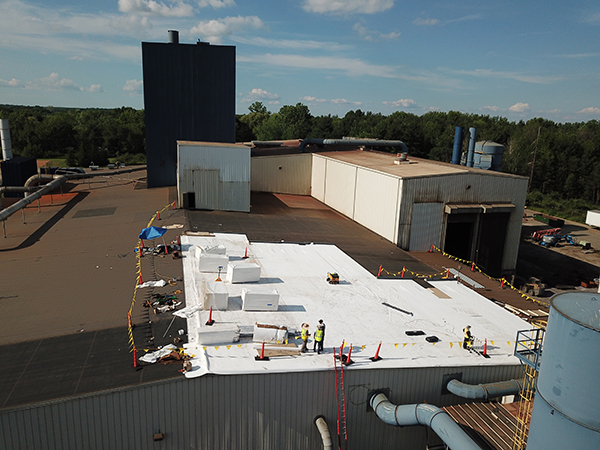
Commercial buildings in Canyon Lake often rely on low-slope roofing systems that can withstand sun exposure, changing temperatures, and seasonal weather conditions. Understanding available roofing options helps property owners make informed decisions about long-term building protection. TPO roofing is a widely used commercial roofing system known for its durability, reflective surface, and compatibility with flat and low-slope roofs.
Call Woolbright’s Roofing & Construction at (951) 609-1818 for TPO roofing in Canyon Lake, CA.
What Is TPO Roofing?
TPO stands for thermoplastic polyolefin, a single-ply roofing membrane commonly installed on commercial buildings. The membrane is manufactured in large sheets that are secured to the roof surface and joined using heat-welded seams.
One reason TPO roofing has become popular is its balance of performance and affordability. The membrane is designed to resist moisture infiltration while providing flexibility that allows it to adapt to normal building movement.
Many commercial property owners choose TPO because it performs well on flat and low-slope roofs, which are common throughout Southern California.
Why TPO Roofing Works Well in Canyon Lake

Canyon Lake experiences warm temperatures and substantial sun exposure during much of the year. Reflective roofing materials can help reduce heat absorption, which is one reason TPO roofing is frequently considered for commercial properties in the region.
The membrane’s reflective surface helps limit rooftop heat buildup. This characteristic may contribute to improved indoor comfort and can reduce strain on building cooling systems during warmer months.
TPO membranes are also designed to resist ultraviolet exposure, weathering, and moisture. These qualities make them well-suited for commercial buildings that require reliable long-term roof protection.
Understanding TPO Roofing Installation and Performance
A TPO roofing system consists of several components working together. In addition to the membrane itself, installations may include insulation, cover boards, attachment systems, flashing details, and drainage components.
Heat-welded seams are a distinguishing feature of TPO roofing. During installation, membrane sections are fused together using specialized equipment. This process creates strong seam connections that help maintain watertight performance.
Like any roofing system, overall performance depends on factors such as installation quality, drainage design, maintenance practices, and roof usage. Routine inspections help identify developing concerns before they affect the building interior.
What Property Owners Should Know Before Choosing TPO Roofing
Before selecting a roofing system, property owners should evaluate building design, budget considerations, expected roof traffic, and long-term maintenance goals. TPO roofing offers several advantages, but every building has unique requirements.
Professional roof assessments can help determine whether TPO is a suitable option for a specific property. Factors such as insulation needs, existing roof conditions, and local climate conditions should all be considered during planning.
Understanding expected lifespan, maintenance requirements, and future repair considerations allows property owners to make more informed roofing decisions.
Learning More About TPO Roofing Options
TPO roofing continues to be a popular choice for commercial buildings because it combines durability, weather resistance, and reflective performance in a single roofing system. Property owners who understand how the system works are better prepared to evaluate whether it aligns with their building’s needs.
For TPO roofing in Canyon Lake, CA contact Woolbright’s Roofing & Construction at (951) 609-1818 today.
FAQ
How long does a TPO roofing system typically last on a commercial building?
Many TPO roofing systems provide 20 years or more of service when professionally installed and properly maintained. Actual lifespan depends on climate conditions, roof traffic, maintenance, and installation quality.
What makes TPO different from other flat roof membrane options like EPDM or PVC?
TPO is known for its heat-welded seams and reflective surface. EPDM is a rubber membrane, while PVC is a thermoplastic membrane with different chemical resistance characteristics. Each system offers distinct advantages depending on building requirements.
How can a property owner tell if a TPO roof needs repair versus full replacement?
The decision depends on the extent of damage, membrane condition, roof age, and the number of affected areas. A professional inspection can determine whether targeted repairs or replacement is the more practical solution.