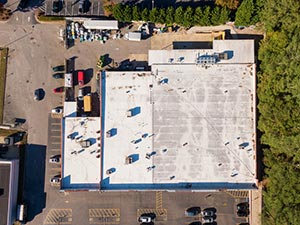
Single-ply roofing is widely used across both commercial and residential properties, offering strong performance compared to older systems like built-up and modified bitumen when properly specified and installed. In Southern California, factors like intense UV exposure, sustained heat, and minimal rainfall directly impact how these systems perform, making climate-specific planning and installation essential for long-term durability.
Woolbright’s Roofing & Construction installs single-ply roofing systems for properties in Beaumont, CA. Call 951-609-1818 to discuss the right approach for your roof and ensure it performs in local conditions.
Single-Ply Roofing: Performance Matters
A large portion of older commercial flat roof systems in Southwest Riverside County were installed using built-up roofing or modified bitumen. Both systems are asphalt-based, and in Southern California’s climate, that creates a predictable weakness. Sustained UV exposure combined with Inland Empire heat accelerates oxidation, causing these systems to dry out, crack, and become brittle much faster than they would in cooler or coastal regions.
Single-ply membranes offer a different level of performance for commercial properties. TPO and PVC systems are polymer-based, which allows them to resist UV degradation far more effectively than asphalt-based roofs. When properly installed, these membranes maintain flexibility, reflect heat, and preserve seam integrity despite constant thermal expansion and contraction during long summer periods.
For commercial buildings, that performance difference is not just technical, it is operational. A single-ply system is less likely to develop widespread cracking, seam failures, or heat-related deterioration, which means fewer disruptions, fewer leak events, and more predictable maintenance. Over a 15 to 25 year lifecycle, that translates into longer service life, improved energy efficiency, and lower overall ownership costs for Southwest Riverside County properties.
TPO vs. PVC for California Flat Roofs: What the Climate Decides

The two primary single-ply options for commercial flat roofs in Southwest Riverside County are TPO and PVC, and the right choice depends on how the building is used and what the roof is exposed to.
TPO is widely used for its reflective white surface, which helps reduce rooftop temperatures and supports Title 24 cool roof compliance. Its heat-welded seams create a strong, watertight bond that performs well in Southern California’s dry climate without the stress of freeze-thaw cycles.
PVC becomes the better option when the roof is exposed to grease or chemicals, such as near restaurant exhaust systems. Oils can break down TPO over time, while PVC is designed to resist that type of exposure.
For most commercial buildings in Southwest Riverside County without chemical exposure, TPO offers the best balance of durability, energy efficiency, and long-term value.
Single-Ply Installation
Installation quality determines single-ply performance more than almost any other variable, and in Southern California’s climate the details that matter most are seam quality, flashing execution, and drainage design. Heat-welded seams on TPO and PVC must be made with calibrated equipment at appropriate ambient and membrane temperatures. In Southwest Riverside County’s summer heat, membrane surface temperatures can be significantly higher than ambient air temperature, which affects the welding parameters a technician needs to use. Flashings at parapet walls, penetrations, and any rooftop equipment must be sealed and terminated correctly to prevent water entry during the region’s infrequent but sometimes heavy rainfall events. Drainage on flat roofs must move water completely off the surface because standing water in a dry climate tends to concentrate the mineral deposits and debris that accelerate membrane surface degradation over time.
Get Single-Ply Roofing Right the First Time
Single-ply roofing delivers reliable long-term performance on flat roofs when the membrane is properly matched to the building and installed to meet the demands of the Southern California climate. Factors like UV exposure, heat, and installation quality all play a role in how well the system holds up over time, making proper specification and execution essential. Woolbright’s Roofing & Construction installs single-ply roofing systems for properties in Beaumont, CA. Call 951-609-1818 to have your flat roof evaluated and receive the right system for lasting performance.
FAQ
Does California Title 24 apply to single-ply roofing on commercial buildings in Southwest Riverside County?
Yes, low-slope commercial roofing in California must meet Title 24 cool roof requirements, and most white TPO and PVC membranes comply with the applicable solar reflectance thresholds.
How long does single-ply roofing typically last on a Southwest Riverside County commercial building?
Properly installed single-ply systems in Southern California commonly achieve 20 to 25 years of service life, with performance influenced by membrane thickness, UV exposure, and maintenance history.
Can single-ply roofing be installed over an existing flat roof in Southwest Riverside County?
A recover is possible when the existing roof is dry, well-adhered, and California code permits an additional layer, though a full assessment of the existing assembly is required first.
Is single-ply roofing compatible with rooftop solar installations in Southern California?
Yes, single-ply membranes are well-suited to solar installations using ballasted or clamp-based racking systems that avoid penetrating the membrane field.