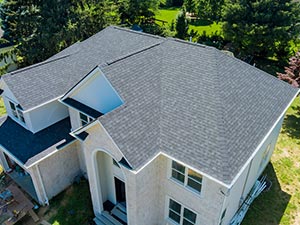
Southern California’s sun puts a level of stress on asphalt shingles that many national guidelines do not fully address. A new shingle roof in Beaumont, CA should be selected with intense UV exposure, sustained heat, and seasonal wind conditions in mind from the start, not treated as secondary factors.
For related residential roofing guidance in Beaumont, see Shingle Roof Repair Beaumont, CA.
Woolbright’s Roofing & Construction has been installing shingle roofs throughout Southwest Riverside County since 1988, and that long-term experience in this climate shapes every recommendation made. Call Woolbright’s Roofing & Construction for your Beaumont, CA property at 951-609-1818 to discuss what your home actually needs.
This article explains why California’s heat and UV exposure require a different approach to shingle selection, how Title 24 cool roof requirements apply to Southwest Riverside County homeowners, and what decades of local installation experience reveal about how shingles perform over time in this environment.
New Shingle Roof: Knowing the Requirements
The Inland Empire heat corridor that covers much of Southwest Riverside County pushes summer temperatures significantly higher than the coastal communities a few miles west, and asphalt shingles respond to that heat in predictable ways over time. Shingle granules that protect the asphalt mat from UV radiation dislodge faster under sustained high temperatures, reducing the membrane’s UV protection and accelerating the oxidation process that makes shingles brittle and prone to cracking. Thermal cycling between the extreme daytime heat and cooler nighttime temperatures creates stress in the shingle mat that compounds over years. A shingle rated for a 30-year service life under average national conditions may perform notably shorter in the Temecula, Murrieta, or Menifee heat corridor without the right product specification for California’s climate demands.
California Title 24 and Cool Roof Requirements

California’s Title 24 building energy code requires that steep-slope roofs on most new construction and re-roofs in climate zones like Southwest Riverside County meet cool roof standards, which means the shingles installed must have a minimum solar reflectance and thermal emittance rating. This requirement is not optional and applies to the vast majority of shingle replacements in the region. The practical effect is that the shingle selection is constrained to products that meet Title 24 thresholds, which eliminates certain dark-colored and lower-reflectance options that might otherwise be available in other states. What many homeowners do not realize is that this requirement actually benefits them directly. A Title 24 compliant shingle reflects more solar energy away from the roof surface, reducing attic temperatures and the cooling load on the home’s HVAC system through Southwest Riverside County’s long hot season.
Climate Impact
Decades of installing shingle roofs across Southwest Riverside County create a level of understanding that no product data sheet can match. You see how different products actually age under sustained UV exposure, which shingles maintain granule coverage longer, and which ones begin to break down sooner in this climate. You learn which underlayment systems hold up to prolonged heat and still perform when heavier rains move through the region.
You also see how Santa Ana wind events in the fall and winter put real stress on roofing systems. Wind ratings on paper are one thing, but field experience shows which installation details prevent lifting and blow-offs, and which roofs are more likely to have issues after a strong event.
That kind of local, real-world knowledge shapes every recommendation and installation approach, helping ensure each new shingle roof is built to perform in the specific conditions Southwest Riverside County delivers year after year.
Shingle Selection Factors
A new shingle roof in Southwest Riverside County should be evaluated on these criteria before any product is selected:
- California Title 24 compliance for the specific climate zone the home falls in, which determines the minimum solar reflectance and thermal emittance the shingle must carry
- Wind resistance rating appropriate for Santa Ana wind exposure, with Class F or Class H rated products providing stronger performance on homes in exposed locations
- Granule composition and coverage quality, which directly determines how well the shingle resists the UV and thermal degradation that shortens service life in Southern California’s climate
Get a New Shingle Roof
Installing a new shingle roof requires careful attention to local climate conditions, building requirements, and proper installation methods. In areas with high heat, UV exposure, and wind, the right specifications and compliance standards play a major role in long-term performance. A properly planned and installed system will outperform a generic approach and deliver lasting protection for years.
Woolbright’s Roofing & Construction installs shingle roofing systems for homes in Beaumont, CA. Call 951-609-1818 to work with a team that understands local conditions and delivers long-term results..
FAQ
Does Title 24 apply to shingle roof replacements in Southwest Riverside County?
Yes, most re-roofing projects in the region trigger Title 24 compliance requirements, and your contractor should be specifying products that meet the applicable cool roof thresholds for your climate zone.
How long should a quality shingle roof last in Southwest Riverside County’s climate?
With proper product selection and installation, a quality architectural shingle roof in this climate can realistically deliver 20 to 25 years of service, though the UV environment is harder on shingles than milder coastal conditions.
What underlayment is recommended under a new shingle roof in Southern California?
Synthetic underlayment is the preferred choice for Southern California installs due to its superior heat and UV resistance compared to traditional felt products.
Are impact-resistant shingles worth considering in Southwest Riverside County?
While hail is less frequent here than in other regions, impact-resistant shingles offer additional wind debris resistance that is relevant given seasonal Santa Ana wind conditions.