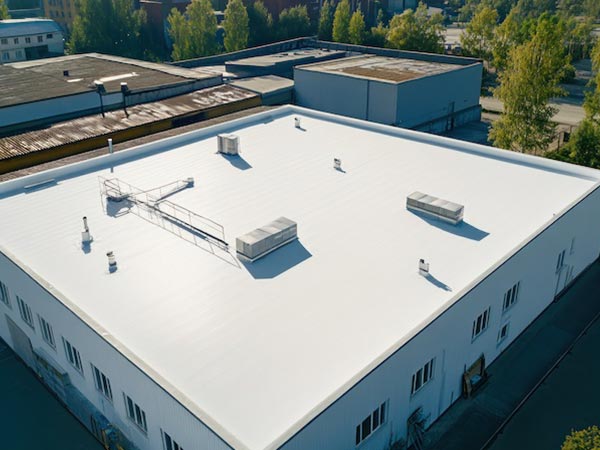
Commercial buildings in Canyon Lake, CA need roofing systems that can withstand intense summer heat while remaining watertight when seasonal rain arrives. The quality of a flat roof installation plays a major role in how well the system performs over its service life. Details such as membrane selection, flashing, seams, penetrations, and drainage can determine whether a roof delivers decades of reliable protection or develops problems much sooner.
For related commercial roofing guidance in Canyon Lake, see Commercial roof replacement in Canyon Lake and Commercial roofers in Canyon Lake.
Woolbright’s Roofing & Construction handles flat roof installation for commercial properties in Canyon Lake, CA. Call (951) 609-1818 to discuss the right roofing system for your building.
A properly planned and installed flat roof can provide dependable waterproofing, withstand changing weather conditions, and help protect your commercial property for years to come.
Flat Roof Installation Begins with the Right System
The waterproof barrier begins with selecting a roofing system that matches the building’s needs. Several commercial flat roofing options use different methods to prevent water intrusion while providing dependable long-term protection.
TPO and PVC roofing systems create watertight seams through heat welding. During installation, adjacent membrane sheets are fused together using specialized equipment to form continuous welded joints. When properly installed, these seams create durable connections that help protect the roof from water intrusion.
EPDM, a synthetic rubber membrane, typically uses seam tape, primers, and compatible adhesives to create watertight connections between membrane sections. Spray polyurethane foam provides another option by creating a seamless surface that reduces the number of joints found in traditional membrane systems.
Selecting the appropriate roofing system depends on the building’s design, expected use, maintenance goals, and environmental conditions.
Flat Roof Installation Depends on Quality Flashing

Even the highest quality membrane cannot prevent leaks if flashing details are installed improperly. Flashing protects areas where the roofing system transitions around roof penetrations, equipment curbs, parapet walls, skylights, drains, and perimeter edges.
These locations experience constant movement caused by temperature changes throughout the year. Summer heat causes roofing materials to expand, while cooler evenings allow them to contract. Proper flashing accommodates this movement while maintaining continuous waterproof protection.
Carefully installed flashing also directs water away from vulnerable openings before it has an opportunity to enter the roofing assembly. Because many roof leaks begin at penetrations rather than open roof areas, flashing quality remains one of the most important factors affecting long term roof performance.
Drainage Is Essential to Long Lasting Waterproofing
A waterproof membrane performs best when water moves efficiently toward roof drains rather than remaining on the surface. Proper drainage helps minimize ponding water and the additional stress prolonged standing water can place on roofing materials.
Roof slope, drain placement, and overall roof layout all influence drainage performance. Areas of persistent standing water can contribute to premature wear, place additional stress on vulnerable components, and increase the risk of problems if the membrane or drainage system becomes compromised.
Drainage should be considered during the design and planning of a flat roofing system and verified throughout installation. Maintaining positive drainage helps protect the roofing system, reduce prolonged water accumulation, and support reliable long-term performance.
Installation Quality Determines Long Term Performance
Every component of a commercial roofing system works together to create dependable waterproof protection. Proper membrane placement, carefully welded or bonded seams, correctly installed flashing, and effective drainage all contribute to the roof’s overall performance.
Shortcuts during installation often remain hidden until years later when leaks begin appearing inside the building. Careful workmanship during construction helps minimize future maintenance concerns while extending the useful life of the roofing system.
Understanding how each installation stage contributes to waterproofing allows building owners to ask informed questions and better evaluate the quality of a completed roofing project.
Professional Flat Roof Installation
A flat roof installation is a significant investment for any commercial property owner, making quality materials and proper installation essential from the start. Careful attention to waterproofing, drainage, seams, and other critical details helps create a roofing system that can withstand Canyon Lake’s changing weather while delivering reliable long-term performance.
Woolbright’s Roofing & Construction handles flat roof installation in Canyon Lake, CA. Call (951) 609-1818 today to discuss the right roofing system for your commercial property.
A properly installed flat roof can reduce the risk of water intrusion, extend roof life, and provide dependable protection for your building for years to come.
FAQ
What makes some flat roof installations last longer than others?
Long lasting installations combine quality materials with proper membrane attachment, well-constructed seams, professionally installed flashing, and effective drainage that keeps water moving off the roof.
How does drainage design affect how well a flat roof keeps water out?
Proper drainage prevents standing water from remaining on the roof for extended periods. Removing water efficiently reduces stress on seams, flashing, and membrane materials while supporting long term waterproof performance.
Can a flat roof be installed over an existing membrane?
Sometimes. A roof recover may be possible if the existing roofing system is structurally sound and local building codes allow it. A professional inspection determines whether recovering or complete removal is the better solution.