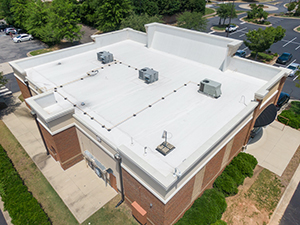
How can a Beaumont property owner turn inspection findings into a practical preventive maintenance schedule? By sorting findings into what needs attention now, what can wait for the next visit, and what only needs watching, then tying each item to a season, a trigger and a written record. Commercial roof maintenance works best as a documented program, not an occasional repair.
Woolbright’s Roofing & Construction manages commercial roof maintenance programs for properties in Beaumont, CA. Call (951) 609-1818 to discuss what a complete program looks like for your building.
What a Commercial Roof Maintenance Program Should Cover

A real maintenance program starts before any work touches the roof. The first step is a complete initial inspection that documents the roof assembly: roof type, deck and insulation, wall coverings, termination points, metal flashings, and equipment installed by other trades such as HVAC units, vents and electrical junction boxes. At Woolbright’s, that inspection includes an estimate of the roof’s life expectancy, a scaled top-view drawing showing equipment placement, and a picture album of the starting condition. That documentation is the baseline everything else is measured against. Without it, repair decisions have no historical reference.
A roof that is already failing in several areas needs repair work before maintenance visits can hold. Applying maintenance on top of a deteriorating roof is like painting over rust. The problem is still there, just harder to see.
Phase 1: Bringing a Commercial Roof to Baseline
Once the inspection is complete, the first phase brings the roof to a serviceable baseline. That means making the repairs identified in the inspection, removing weathered sealants at maintenance areas, and applying fresh modified mastic with granules broadcast into the wet material. The granule layer helps give the coating work in the next phase something to bond to. Phase 1 also clears debris from the roof surface. On low-slope roofs, debris and blocked drains lead to ponding water, which can accelerate wear. Clean surfaces and clear drainage are part of the baseline, not an afterthought.
Phase 2: What Commercial Roof Maintenance Looks Like Year Over Year
With the roof at baseline, the second phase builds on it. The visit checks the previous year’s sealant work, applies a high-performance acrylic coating over the mastic, and addresses cracking with acrylic caulk. The acrylic coating and caulk are applied to the specified maintenance areas to help protect repaired details from weathering. Their performance depends on compatible materials, sound preparation and ongoing inspection.
Phase 3: Post Care Within Commercial Roof Maintenance Programs
After that, annual visits follow a straightforward pattern: inspect, photograph, compare against the prior year’s documentation, address what has changed and update the record. That accumulating history is what allows a real decision about the roof. When an owner asks whether the roof needs replacement or can be managed for several more years, the answer comes from a documented history of how it has performed, not a single inspection with nothing to compare against. Owners who want to plan across the life of the roof can also read about roof asset management and lifecycle planning.
A Seasonal and Post-Storm Task Matrix
A schedule is easier to follow when it separates what an owner can safely observe from what belongs to a contractor. The matrix below is a general guide. The right timing depends on the roof, its condition and the program terms.
| When | Safe Owner Observations | Contractor Work |
|---|---|---|
| Spring | Interior ceiling stains or damp spots, standing water seen from a safe vantage point, debris near roof access | Annual inspection with photos, drain and scupper clearing, seam and flashing checks, comparison with last year’s record |
| Fall, before the rainy season | New stains, unusual odors or drips after the first rain, overflowing gutters or downspouts seen from the ground | Drain and surface debris clearing, sealant and coating review, repair of items found in the spring report |
| After a major storm or high wind | Debris on the ground or on a visible roof edge, new interior leaks, displaced rooftop covers seen from below | Post-storm inspection of seams, flashing, penetrations and equipment, with photos |
| After other trades work on the roof | Notes on who accessed the roof and when | Check for punctures, disturbed flashing and unsealed penetrations, and document the condition |
| Whenever a new leak appears | Date, location and conditions when the leak showed up | Locate the source, check for wet insulation, repair and add the finding to the record |
Roof access is work for trained crews. Owners and staff should observe from the ground, from interior spaces or from a safe, permitted vantage point, and should not climb onto a commercial roof to check a suspected problem.
Priority Levels and Follow-Up Triggers
Every finding in a maintenance report should carry a priority and a trigger for the next look, so nothing sits unaddressed because it was never ranked.
| Priority | Typical Finding | Follow-Up Trigger |
|---|---|---|
| Urgent | Active leak, open seam or flashing, blocked drain with standing water | Address promptly and recheck after the next rain |
| Near term | Cracked sealant, worn coating, loose termination, minor ponding | Schedule repair before the next season and recheck at the next visit |
| Monitor | Surface wear, small changes since last year’s photos | Compare at the next annual inspection and escalate if it changes |
Photo records make these rankings meaningful. Photos taken from the same locations each visit, labeled by date and tied to the roof drawing, show whether a spot is stable or getting worse.
Tracking Completed Actions and Warranty Requirements
Maintenance cannot promise that a roof will never leak, but a good record shows what was found, what was done and when. Keep a simple log with the date, the finding, the priority, the action taken, who did it and the photo reference. If the roof is under a manufacturer or contractor warranty, check the written terms for inspection or maintenance requirements and store inspection reports and repair records with the warranty paperwork. The terms of any warranty are what govern coverage, not general statements about maintenance.
Commercial Roof Maintenance Protects More Than the Roof
A structured program builds a documented history of the roofing system. That record can support warranty compliance, simplify due diligence during a property sale and give clear insight into the condition of the roof. Repair needs that surface through inspections are covered by Woolbright’s commercial roofing repairs in Beaumont.
Woolbright’s Roofing & Construction manages commercial roof maintenance programs for properties in Beaumont, CA. Call (951) 609-1818 to set up a program that builds a reliable record from the first visit forward.
Frequently Asked Questions
How often should a commercial roof in Beaumont be inspected under a maintenance program?
Annual visits are part of the described program, while additional inspections may be appropriate for some roofs. A new program typically begins with an initial inspection and a baseline repair phase before the annual schedule starts. Storms or new leaks can call for an earlier visit.
Does a maintenance program cover emergency leak repairs between visits?
That depends on the specific program terms, so confirm what interim repair coverage looks like before agreeing to a program.
Can a maintenance program be started on an older commercial roof?
Yes, though older roofs typically need more work in the baseline phase before the annual routine becomes cost-effective.
Does the documentation transfer to a new building owner?
It can be passed along with the property records, and the documented history is one of the assets a well-maintained roof brings to a sale.