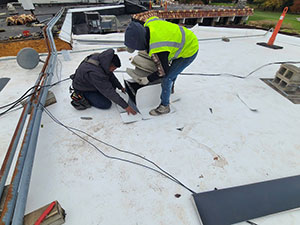
For commercial building owners in Lake Elsinore, CA, understanding how weather impacts single-ply roof repair is critical to protecting your facility and avoiding repeat issues. Single-ply roofing systems, such as TPO, PVC, and EPDM, are durable and efficient, but repair success is heavily influenced by temperature, moisture, wind, and sun exposure during the repair process. Knowing how these environmental factors affect repairs helps owners plan smarter and reduce long-term risk. If you’re evaluating roof concerns in Lake Elsinore, CA, call (951) 609-1818 to discuss repair timing and options with Woolbright’s Roofing & Construction.
How Weather Conditions Affect Single-Ply Roof Repair Success
Temperature: The Hidden Factor Behind Adhesion and Sealing
Temperature plays one of the most important roles in single-ply roof repair success. Single-ply membranes rely on adhesives, heat welding, or tapes that must cure or bond correctly to create a watertight seal.
In cooler temperatures, adhesives may thicken or fail to activate properly, leading to weak bonds. Heat-welded seams can also cool too quickly, preventing full fusion between membrane layers. On the other hand, extreme heat can cause membranes to expand excessively, increasing the risk of wrinkles or tension once temperatures drop again.
Manufacturers often specify minimum and maximum temperature ranges for repairs because material chemistry changes outside those limits. Scheduling repairs within optimal temperature windows ensures seams remain flexible, secure, and long-lasting, especially important in regions like Lake Elsinore, CA, where seasonal swings can occur.

Why Dry Conditions Matter
Moisture is one of the most challenging obstacles to effective single-ply roof repair. Even small amounts of dew, condensation, or residual moisture can compromise adhesion and seam integrity.
Surface moisture prevents adhesives from bonding properly.
High humidity can slow curing times or trap moisture beneath patches.
Hidden moisture beneath the membrane can lead to blistering after repairs are completed.
Rain during or shortly after repairs increases the likelihood of premature failure. This is why professional repairs prioritize thorough drying and moisture testing before work begins. In commercial settings, moisture intrusion can disrupt operations, damage insulation, and shorten roof lifespan, making weather-aware scheduling essential.
The Impact of Wind Conditions on Single-Ply Roof Repair Precision
Wind may seem less obvious than rain or temperature, but it significantly affects single-ply roof repair outcomes. Strong or gusty winds can interfere with precision work, particularly when handling lightweight membranes.
Wind can:
- Lift unsecured membrane edges during repairs
- Introduce debris into adhesives or seams
- Cool heat-welded areas too rapidly, weakening bonds
For large commercial roofs, wind exposure is often greater due to building height and open roof layouts. Calm conditions allow technicians to apply consistent pressure, maintain accurate seam alignment, and ensure uniform adhesion across repaired areas.
UV Exposure and Sun Intensity During Repairs
Sunlight and UV exposure affect single-ply roofing materials before, during, and after repairs. Prolonged UV exposure gradually breaks down membrane surfaces, making older roofs more brittle and sensitive during repairs.
During active repair work, intense sun can overheat membranes, causing them to soften excessively. This may lead to stretching or distortion that compromises seam placement. Proper timing, often during morning hours or mild weather, helps maintain material stability and improves repair accuracy.
Long-term, UV-resistant patches and coatings are often incorporated into repairs to restore protection and slow future degradation.
Why Weather-Aware Planning Reduces Long-Term Costs
From a financial perspective, weather-informed single-ply roof repair reduces repeat repairs, downtime, and emergency costs. Rushed work in poor conditions often leads to short-term fixes that fail prematurely, increasing lifecycle expenses.
Strategic repair planning based on weather conditions allows building owners to:
- Extend roof service life
- Protect interior assets and tenants
- Avoid operational disruptions
- Maintain manufacturer warranty compliance
Understanding how environmental factors interact with roofing materials gives owners greater control over maintenance budgets and asset performance.
Single-Ply Roof Repair Experts
For commercial properties in Lake Elsinore, CA, successful single-ply roof repair depends on more than materials, it depends on timing, conditions, and environmental awareness. Weather plays a direct role in adhesion, sealing, and long-term durability. If you’re planning repairs or addressing roof concerns, contact Woolbright’s Roofing & Construction at (951) 609-1818 to discuss solutions designed for your building and local climate conditions.
FAQ
Can single-ply roof repairs be done during hot weather?
Yes, but extreme heat requires careful handling to prevent membrane distortion and improper seam formation.
Why does moisture affect single-ply roof repairs so much?
Moisture interferes with adhesion and can become trapped, leading to future leaks or blistering.
Are certain single-ply materials more weather-sensitive than others?
Yes, EPDM, TPO, and PVC each respond differently to temperature and UV exposure during repairs.
Can weather-related repair failures void warranties?
Improper repairs performed outside manufacturer guidelines may affect warranty coverage.